

The right oil for a 3.5L EcoBoost is the product that meets the exact vehicle’s viscosity and performance specification. Engine name, mileage and a “full synthetic” label alone are not enough. Start with model year, vehicle, engine variant and market.
Brand comparisons come after fit. Do not choose a thicker grade to hide low pressure, extend service solely because a bottle advertises long life or infer performance from a single additive concentration.
Which Specification Should You Match?
Check the matching owner/service information and any applicable updates. As a specific example, the 2025 F-150 North American manual, printed pages 498–499, lists SAE 5W-30 meeting WSS-M2C961-A1 for its 3.5L EcoBoost section. It separately gives an extreme-cold alternative. Do not transfer that automatically to every year or another EcoBoost vehicle.
Match viscosity, Ford requirement and applicable API/ILSAC guidance together. API describes service categories and compatibility; categories have advanced since SP/GF-6. A GM dexos license does not automatically establish every Ford requirement.
| Check | Why It Matters |
|---|---|
| Exact application | Year, engine variant and market identify the relevant instructions. |
| Current product data | The same brand/grade can have different formulations or market versions. |
| Service interval | Use the vehicle’s time, mileage, monitor and severe-use requirements. |
| Filter and fill | Correct parts, quantity and measured level matter independently of brand. |
How Should You Compare Familiar Brands?
Use the current technical data and actual bottle for the exact product. A label photograph from an earlier formulation is not a current approval. Synthetic blend versus full synthetic alone does not rank wear protection or establish a longer interval.
Motorcraft: Check The Exact Product
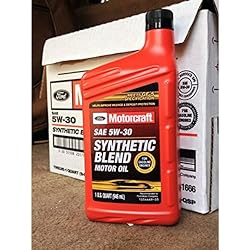
Ford recommends Motorcraft in the cited manual and describes its alternative-oil requirements. That is useful application guidance, not proof that every Motorcraft oil or older package is suitable.
Do not assume a fixed five-thousand-mile interval or that a brand-matched filter is necessary because of the oil’s brand. Use the correct filter application and service procedure.
Mobil 1: Check The Exact Formulation
Mobil 1 covers several products and markets. Confirm the relevant viscosity and documented specification rather than assuming every full-synthetic 5W-30 has the same approvals.
One old virgin-oil analysis cannot rank current engine protection or establish a universal 7,500-mile service interval. Cold-cranking, volatility and additive figures need the actual product, test and context.
High-Mileage Products: Match Specification First

A compatible high-mileage product may be considered, but seventy-five thousand miles does not automatically make one brand the best oil. Seal-conditioning claims are not a repair for a damaged gasket or mechanical problem.
Do not infer that more magnesium always handles soot better or that one calcium-to-magnesium ratio proves superior protection. Finished-oil performance tests assess more than a simple ingredient ranking.
Which Oil Problems Need Separate Diagnosis?
Overfill Or Rising Level
Check level under the specified conditions. An established overfill or a persistently rising level needs correction/investigation. Do not assume every leak or blue-smoke complaint proves excess oil.
Capacity and measured level are related but different. Do not simply pour a fixed amount into an engine that has not been drained as specified.
Leakage Or Consumption
Locate the actual loss and assess level using the correct procedure. A high-mileage oil or additive does not replace repairing a failed seal, line or other component. Keep oil away from hot exhaust and inspect a major leak promptly.
Pressure Warning
Stop safely and follow the warning instructions. Correct level does not prove correct pressure, and changing from 5W-20 to 5W-30 is not a general pressure repair. Use actual specification and supported pressure/circuit diagnosis.
How Much Oil Does It Take?
The cited 2025 F-150 manual’s 3.5L EcoBoost section lists 6.0 US quarts/5.7 liters including the filter. This is a scoped example, not a capacity for every vehicle with a 3.5L EcoBoost badge.
Use the exact manual, complete the correct service and verify level afterward. Do not treat a jug size, brand recommendation or oil-life reset as proof that the fill and pressure are correct.
Join The Conversation.
No comments yet. Comments are moderated before publication.